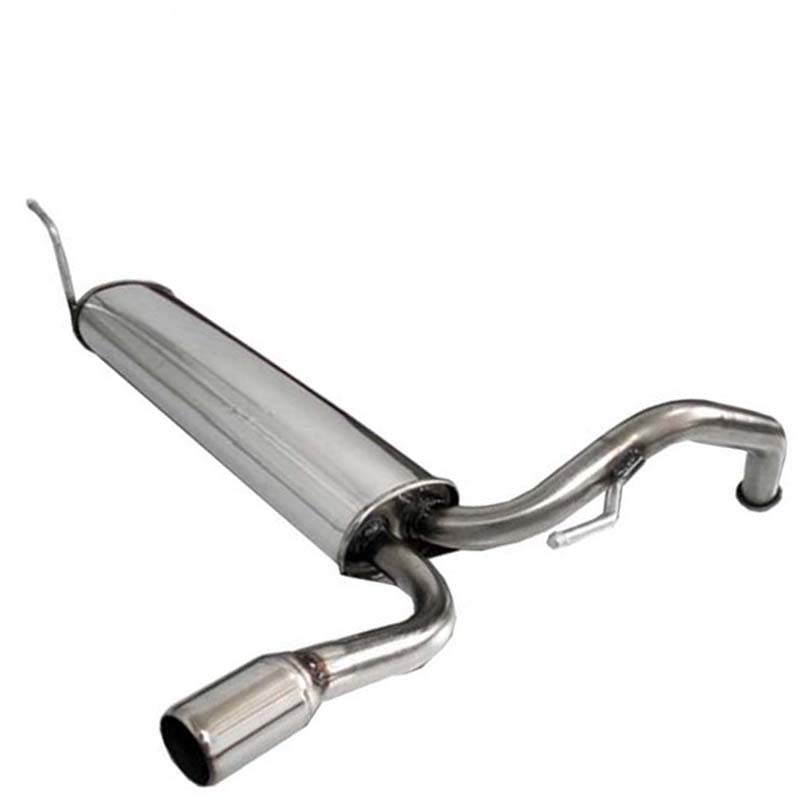
The BYD F0 remains a highly popular compact vehicle across many global markets. This widespread utilization drives a massive aftermarket replacement cycle. Auto parts distributors face a high-volume opportunity here. Rear exhaust components endure constant exposure to harsh elements. Extreme condensation and road salt accelerate metal decay rapidly.
Sourcing an Exhaust Muffler for BYD F0 frequently directs buyers toward Chinese manufacturing hubs. Buyers must navigate a vast and complex supplier landscape. The gap separating premium OEM-grade facilities from low-tier trading companies remains enormous. Quality inconsistencies can quickly erode your hard-earned profit margins.
We designed this guide to provide a highly actionable sourcing framework. You will learn how to evaluate rear segment mufflers effectively. We help you minimize warranty claims and identify truly capable manufacturing partners. You can verify materials, ensure exact fitment, and audit factory credentials seamlessly.
Key Takeaways
Margin vs. Reliability: High-quality Made-in-China direct manufacturing offers optimal margins, provided strict material (e.g., 304/201 stainless) and weld standards are enforced.
Fitment is Non-Negotiable: OEM-matched flange dimensions and hanger positions eliminate the mechanic pushback that plagues low-tier aftermarket exhausts.
Acoustic Control: Proper internal baffling ensures the "mute" performance required for standard urban commuting without sacrificing exhaust velocity.
Supplier Vetting: Moving beyond B2B aggregators to evaluate ISO-certified factory capabilities, scalable MOQs, and verifiable QC data.
The Business Case for the BYD F0 Rear Segment Market
Understanding why parts fail dictates how you source replacements. The BYD F0 serves primarily as an urban commuter car. Drivers take frequent short city trips daily. Engines rarely reach optimal operating temperatures during these brief commutes. Internal condensation builds up rapidly inside the rear exhaust segment. Moisture mixes directly into the expelled exhaust gases. Corrosive acids form quickly inside the muffler chamber. These acids rot the metal from the inside out. Externally, road salt and debris accelerate this structural decay. Distributors see incredibly high replacement demands due to these compounding factors.
Achieving sustained profitability requires a careful balancing act. You must secure low per-unit costs initially. However, you also need near-zero return rates simultaneously. Frequent returns destroy your profit margins instantly. Poor fitment causes the vast majority of aftermarket returns. Mechanics refuse to install poorly shaped exhaust components. They often charge extra labor for necessary modifications. End-users complain loudly and demand immediate refunds. You lose money on reverse logistics and damaged brand reputation. What to watch out for: mechanics simply sending the part back rather than dealing with misaligned flanges.
Modern supply chain realities dictate your sourcing strategy. China manufactures the vast majority of global exhaust components. You cannot simply avoid specific geographic manufacturing regions. True competitive advantage relies on advanced factory selection protocols. Avoid writing off overseas manufacturing entirely. Seek out top-tier facilities utilizing automated production lines. Ignore basic B2B aggregators prioritizing lowest cost over quality. Focus on verified manufacturing capabilities instead. You can achieve OEM reliability by enforcing strict production standards.
Material Selection and Acoustic Engineering
Choosing the correct raw material defines product longevity. You must align your material choices with your target market climate. Different steel grades offer vastly different lifespans and price points. We break down the standard material options below.
Exhaust Material Comparison Chart
Material Type
Cost Level
Corrosion Resistance
Best Use Case
Aluminized Steel
Low
Fair
Dry climates, budget product lines.
201 Stainless Steel
Medium
Good
Industry standard, balanced durability.
304 Stainless Steel
High
Excellent
Severe climates, premium product lines.
Aluminized steel offers a highly cost-effective solution initially. It suits dry climates where road salt remains absent. However, it delivers a significantly shorter lifespan overall. 201 stainless steel represents the current industry standard. It provides budget-friendly durability for most urban environments. 304 stainless steel delivers premium corrosion resistance. We recommend it for severe climates experiencing heavy winter salting. It perfectly supports higher-tier aftermarket product lines.
Acoustic architecture matters just as much as material choice. Top manufacturers spend significant resources evaluating internal chamber designs. The BYD F0 requires a specific "mute" sound profile. Urban commuters dislike loud, droning exhaust notes in small cabins. Engineers utilize precision-placed baffle plates internally. They often pack chambers using premium high-temp fiberglass. This dampens sound decibels to match OEM levels perfectly. Importantly, they achieve this acoustic control without creating restrictive backpressure. High backpressure chokes engine performance and reduces fuel economy.
You must verify supplier claims before committing capital. Never accept material claims purely at face value. Request physical samples to verify material thickness yourself. Use digital calipers to measure the metal wall gauge accurately. Test the steel purity before approving any bulk orders. You can use simple chemical testing kits on-site. Apply a drop of testing acid to the metal surface. 304 stainless steel will not turn red or brown. 201 stainless will show slight discoloration quickly. Enforcing these checks protects your inventory quality.
Fitment Realities: Evaluating the Exhaust Muffler for BYD F0
Fitment issues plague the lower tiers of the aftermarket parts industry. We call this the cost of "almost fits." An exhaust system either fits perfectly or it fails entirely. Mechanic frustration escalates quickly when bolt-on parts require modification. Shop owners lose money when bays get tied up. They will flag your brand as unreliable and switch suppliers. End-users also complain about persistent rattling noises post-installation. A poorly fitted Exhaust Muffler for BYD F0 hits the chassis over bumps. It creates severe vibration inside the passenger cabin.
Dimensional accuracy prevents these costly installation failures. Top manufacturers employ 1:1 CNC-mandrel bending machines. Mandrel bending maintains the pipe diameter through every curve. Cheap factories use crush bending methods instead. Crush bending restricts exhaust flow and weakens the metal structure. Laser-cut flanges guarantee a perfect seal against the mid-pipe. Stamped flanges often warp during the welding process. Warped flanges cause permanent exhaust leaks. Exhaust leaks trigger check engine lights and fail emissions testing.
Hanger and gasket alignment require absolute precision. The BYD F0 utilizes specific rubber isolator hangars underneath the chassis. Your aftermarket muffler hangers must align perfectly to these points. Misaligned hangers force mechanics to stretch the rubber isolators. Stretched isolators transfer excessive engine vibration directly into the cabin. This constant tension also creates severe stress fractures over time. The metal hangers will eventually tear completely off the muffler body. We always recommend testing fitment on an actual physical chassis.
Decoding "Made in China" Quality: Separating Factories from Traders
Many buyers still distrust overseas manufacturing initially. We must address this lingering stigma objectively. Historically, some suppliers delivered highly inconsistent production batches. Buyers frequently received containers filled with poor weld penetration. Thin metal walls rusted out within six months. However, modern automated facilities have completely solved these legacy issues. The Chinese auto parts sector now utilizes advanced robotics extensively. Quality depends entirely on which specific supplier you select. Top manufacturers maintain strict ISO-certified quality control systems.
Welding techniques reveal the true capability of a factory. You will encounter two primary methods: TIG and MIG welding. They present obvious visual and structural differences.
Table 1: Welding Process Characteristics
Characteristic
TIG Welding (Premium)
MIG Welding (Budget)
Visual Appearance
Clean, uniform "stack of dimes" look.
Thicker bead, occasional spatter marks.
Penetration
Deep, precise, hermetic seal.
Adequate, but prone to pinhole leaks.
Automation Level
Highly automated in top facilities.
Often manual, relying on operator skill.
Top manufacturers utilize automated TIG welding for rear segment mufflers. TIG welding creates hermetic seals preventing internal moisture escape. It guarantees maximum structural longevity under high-vibration conditions. The BYD F0 3-cylinder engine produces unique vibration frequencies. Weak MIG welds often crack under these specific harmonic stresses. Automated robotic arms remove human error from the equation entirely. You receive identical weld quality across a thousand units.
Trustworthy factory floors implement rigorous quality control checkpoints. You should ask to see these processes during video tours. Workers submerge completed mufflers into water tanks. They pump pressurized air inside to check for pinhole leaks. Acoustic engineers conduct random decibel testing on finished batches. They ensure the sound profile matches the OEM baseline exactly. The best factories utilize standardized steel jigs for the BYD F0. Every single unit gets dropped into this jig before packaging. If the mounting points do not align perfectly, they scrap it.
Sourcing Framework: Shortlisting and Implementation
You need a systematic approach to shortlist potential manufacturing partners. Moving beyond B2B aggregators requires requesting specific documentation upfront. Do not rely solely on slick marketing brochures or websites. Insist on verifying their core operational credentials first.
Here are the necessary steps to vet your suppliers:
Request ISO Certifications: Ask for current ISO 9001 and ISO 14001 certificates. Ensure the company name matches their export license exactly.
Demand Material Composition Certificates: Require mill test reports for the steel batches they purchase. This proves they actually use genuine 304 or 201 stainless.
Conduct Video Audits: Request a live video tour of the factory floor. Watch out for facilities refusing live calls; they are usually just trading companies.
Review Technical Drawings: Ask for CAD files or blueprints. Real manufacturers possess these. Traders usually cannot produce them upon request.
Implement a strict sample evaluation strategy next. Order a "first article" sample before discussing any bulk volume. Compare the sample weight directly against an OEM F0 muffler. Lighter units indicate thinner, inferior steel wall gauges. Inspect the weld seams thoroughly for uniform penetration. Look inside the piping for excessive welding slag. Loose slag creates rattling noises and restricts exhaust flow. Finally, execute a real-world fitment test. Mount the sample onto a local BYD F0 chassis. Check for clearance around the bumper and suspension components.
Structuring commercial terms correctly protects your supply chain stability. Negotiate Minimum Order Quantity (MOQ) scaling for your initial orders. You might start with 50 units to test market reception. Top manufacturers will accommodate this if they see growth potential. Define warranty terms clearly in your purchasing contract. Require a minimum 12-month warranty covering structural weld failures. Discuss realistic lead times for production and container loading. Buffer your inventory to account for potential shipping delays. Clear communication prevents costly stock-out situations later.
Conclusion
Sourcing a reliable rear segment exhaust requires disciplined risk management. It is an exercise in strict standard enforcement above all else. You cannot afford to compromise on critical structural elements. The aftermarket environment punishes poor quality very quickly. Your reputation relies heavily on the manufacturing partners you select.
Prioritize verified material grades like 304 or 201 stainless steel.
Insist on automated TIG welding processes for long-term durability.
Demand exact 1:1 OEM fitment to eliminate mechanic pushback completely.
Focus on rigorous factory vetting rather than the lowest possible price.
Distributors following this framework capture the most profitable market segments. You will reduce return rates to near-zero levels. Customers will trust your brand for BYD F0 replacements. Start by requesting material certificates from your current suppliers today. Audit your existing inventory against the fitment standards outlined above.
FAQ
Q: What is the expected lifespan of a Made-in-China stainless steel exhaust muffler for the BYD F0?
A: Typically 3 to 7 years depending on the material grade (201 vs. 304 stainless) and local environmental factors like road salt usage.
Q: Are modifications required to install these rear segment mufflers?
A: Top-tier aftermarket mufflers are engineered as direct bolt-on replacements. If cutting or welding is required, the part does not meet acceptable distributor standards.
Q: How can I verify if a B2B supplier is a direct manufacturer or a trading company?
A: Request live factory floor video tours, check for consistent ISO certifications under the same company name, and ask for detailed technical drawings or customization capabilities (OEM/ODM) which traders typically cannot easily provide.
Q: What is the standard MOQ for custom-branded BYD F0 exhausts?
A: While standard off-the-shelf units may have MOQs as low as 10-50 pieces, custom laser-etched branding or specific material upgrades usually require MOQs of 100+ units.