As industries push for stricter emissions regulations and the need for cleaner air increases, the Ceramic Honeycomb Substrate has become a key component in emission control technologies. At Shandong Ningjin Lijianfei Auto Parts Co., Ltd., we specialize in manufacturing high-performance ceramic substrates that are vital in ensuring compliance with environmental standards. This blog will delve into the importance of ceramic honeycomb substrates, explaining what they are, how they are used, and why they are indispensable in catalytic converters and emission control systems.
Understanding Ceramic Honeycomb Substrate
What Is a Ceramic Honeycomb Substrate?
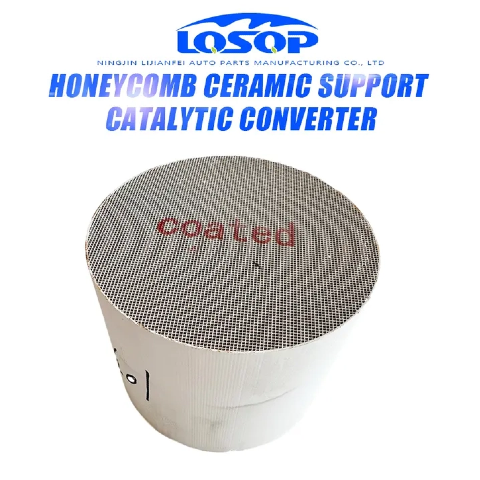
A Ceramic Honeycomb Substrate is an essential component used in catalytic converters, primarily in automotive exhaust systems and industrial applications. It consists of a ceramic material with a unique honeycomb structure that serves as a support for a catalyst. This design allows exhaust gases to pass through channels within the substrate, where the chemical reactions needed to neutralize pollutants occur.
Made from high-quality ceramics like cordierite, these substrates are known for their exceptional thermal stability and low thermal expansion, which allows them to endure extreme heat and fluctuating temperatures. The honeycomb structure maximizes the surface area available for the catalyst, enhancing the overall efficiency of the system by providing more surface for the catalytic reactions to occur.
How Ceramic Structures Are Made
The process of creating ceramic honeycomb substrates involves several precise steps. It starts with extrusion, where a ceramic material mixture is pushed through a mold to create the desired shape—typically round or square cells. This process is followed by calcination, where the substrate is fired at high temperatures to set the ceramic material and improve its strength and stability.
Once the structure is complete, the honeycomb substrate is coated with a catalytic washcoat, a thin layer that enables the catalyst to adhere to the surface. This coating is often enriched with precious metals like platinum (Pt), palladium (Pd), and rhodium (Rh). These metals enhance the substrate's ability to promote chemical reactions, converting harmful pollutants in exhaust gases into safer compounds like carbon dioxide (CO₂) and nitrogen (N₂).
Common Shapes and Cell Densities
Ceramic honeycomb substrates come in a variety of shapes and cell densities to meet different application needs. The most common shapes include round, square, and racetrack configurations. Each design is tailored to specific applications, optimizing the flow of exhaust gases and ensuring maximum efficiency in emission control systems.
Cell density refers to the number of cells per square inch. A higher cell density means more surface area for the catalyst, which can enhance performance. However, it can also lead to a higher pressure drop, which may affect engine performance. Therefore, it is essential to choose the right cell density depending on the specific requirements of the system.
Key Properties That Define Performance
The performance of a Ceramic Honeycomb Substrate is largely determined by several key properties that contribute to its effectiveness in catalytic converters and emission control systems.
High Thermal Resistance
One of the primary reasons ceramic honeycomb substrates are favored in emission control applications is their ability to withstand high temperatures. Exhaust gases in both automotive and industrial systems can reach extreme temperatures, and ceramic materials, such as cordierite, are highly resistant to thermal shock. This makes them an ideal material for catalytic converters, which must operate effectively under constant heat fluctuations.
Mechanical Strength
The honeycomb structure provides the necessary mechanical strength while maintaining a lightweight design. This allows the substrate to endure harsh environmental conditions and survive frequent thermal cycles without cracking or degrading. As a result, ceramic honeycomb substrates can operate efficiently for extended periods, reducing the frequency of replacements and maintenance costs.
Large Surface Area and Porosity
The honeycomb design itself maximizes the available surface area, allowing for greater interaction between the exhaust gases and the catalyst. The high porosity of the substrate ensures that gases can flow through with minimal resistance while providing ample space for the catalyst to perform its functions. This combination of large surface area and porosity is key to the substrate's effectiveness in reducing harmful emissions.
Low Pressure Drop and Catalyst Adhesion Efficiency
Another advantage of ceramic honeycomb substrates is their ability to minimize pressure drop. The low-pressure drop ensures that exhaust gases flow efficiently through the system without significantly hindering engine performance. Furthermore, the catalyst adhesion efficiency of ceramic substrates ensures that the precious metals used in the catalytic coating adhere effectively to the surface, providing long-lasting catalytic activity.
Examples of Ceramic Honeycomb Substrate Uses
Automotive Emission Control
The primary use of ceramic honeycomb substrates is in automotive catalytic converters. In vehicles, these substrates help to convert harmful pollutants such as carbon monoxide (CO), nitrogen oxides (NOx), and hydrocarbons (HC) into safer emissions like carbon dioxide (CO₂) and nitrogen (N₂). The large surface area of the honeycomb structure allows for more efficient interactions between the exhaust gases and the catalyst, improving the overall efficiency of the emission control system.
In addition, ceramic substrates are preferred in automotive applications due to their ability to withstand high temperatures and their lightweight design, which does not negatively impact fuel efficiency or engine performance.
Industrial Exhaust Treatment Systems
Beyond automotive applications, ceramic honeycomb substrates are also used in industrial exhaust treatment systems. In industries such as manufacturing, energy production, and chemical processing, exhaust gases are often treated to remove harmful pollutants before being released into the environment. Ceramic substrates provide a cost-effective solution for improving air quality and meeting environmental regulations.
Chemical Process Reactors
In chemical plants, ceramic honeycomb substrates are used in catalytic reactors to support chemical reactions that produce a variety of industrial products. The high surface area and catalytic efficiency of the substrates make them ideal for optimizing reaction rates, resulting in improved production efficiency and higher yields.
Benefits Compared to Alternative Substrates
When compared to other types of substrates, ceramic honeycomb substrates offer several advantages that make them the preferred choice in many emission control and industrial applications.
Lower Back Pressure and Higher Conversion Efficiency
One of the main benefits of ceramic honeycomb substrates is their ability to provide low back pressure while maintaining high catalytic efficiency. The design allows exhaust gases to flow freely through the channels, minimizing resistance and ensuring optimal system performance. This feature is particularly important in automotive applications, where engine performance is crucial.
Durability Under Frequent Thermal Cycles
Ceramic substrates are highly resistant to thermal shock, meaning they can withstand the extreme heat fluctuations that occur in emission control systems without cracking or deteriorating. This durability ensures long-lasting performance, even under harsh operating conditions.
Better Heat Resistance Than Metal-Based Substrates
Compared to metal-based substrates, ceramic substrates offer superior heat resistance. This makes them better suited for high-temperature applications like automotive catalytic converters and industrial exhaust treatment systems, where temperatures can reach several hundred degrees Celsius.
Table: Ceramic Honeycomb vs Other Substrate Types
Feature | Ceramic Honeycomb | Metal Substrate | Packed Pellets |
Thermal Stability | ⭐⭐⭐⭐⭐ | ⭐⭐⭐ | ⭐⭐ |
Surface Area | ⭐⭐⭐⭐⭐ | ⭐⭐⭐⭐ | ⭐ |
Pressure Drop | ⭐⭐⭐⭐ | ⭐⭐⭐ | ⭐⭐⭐ |
Durability | ⭐⭐⭐⭐⭐ | ⭐⭐⭐ | ⭐⭐ |
Cost Efficiency | ⭐⭐⭐⭐ | ⭐⭐⭐⭐⭐ | ⭐⭐⭐ |
This table summarizes the key advantages of ceramic honeycomb substrates compared to other options, making it easier for customers to see why they are an ideal choice for emission control and industrial applications.
Conclusion
In conclusion, ceramic honeycomb substrates are a vital component in emission control systems, especially in catalytic converters used in vehicles and industrial exhaust treatment systems. Their ability to withstand high temperatures, provide a large surface area for reactions, and offer low back pressure makes them the preferred choice for reducing harmful emissions and improving overall system efficiency.
By choosing Shandong Ningjin Lijianfei Auto Parts Co., Ltd. as your supplier for high-performance ceramic honeycomb substrates, you are investing in a product that guarantees reliability, efficiency, and compliance with environmental regulations.
For more information or to place an order, contact us today to learn how our Catalytic Converter can meet your emission control needs.
FAQ
1. What are the benefits of ceramic honeycomb substrates in emission control systems?
Ceramic honeycomb substrates provide excellent thermal stability, large surface area, and low pressure drop, making them ideal for catalytic converters in automotive and industrial applications.
2. How do ceramic substrates compare to metal-based substrates in terms of heat resistance?
Ceramic substrates offer superior heat resistance compared to metal-based substrates, making them better suited for high-temperature applications such as automotive catalytic converters.
3. Can ceramic honeycomb substrates be used in industrial exhaust systems?
Yes, ceramic honeycomb substrates are widely used in industrial exhaust treatment systems to improve air quality and meet environmental standards.
4. What materials are used to make ceramic honeycomb substrates?
Ceramic honeycomb substrates are typically made from cordierite or aluminum oxide, materials chosen for their high thermal stability and low thermal expansion properties.


