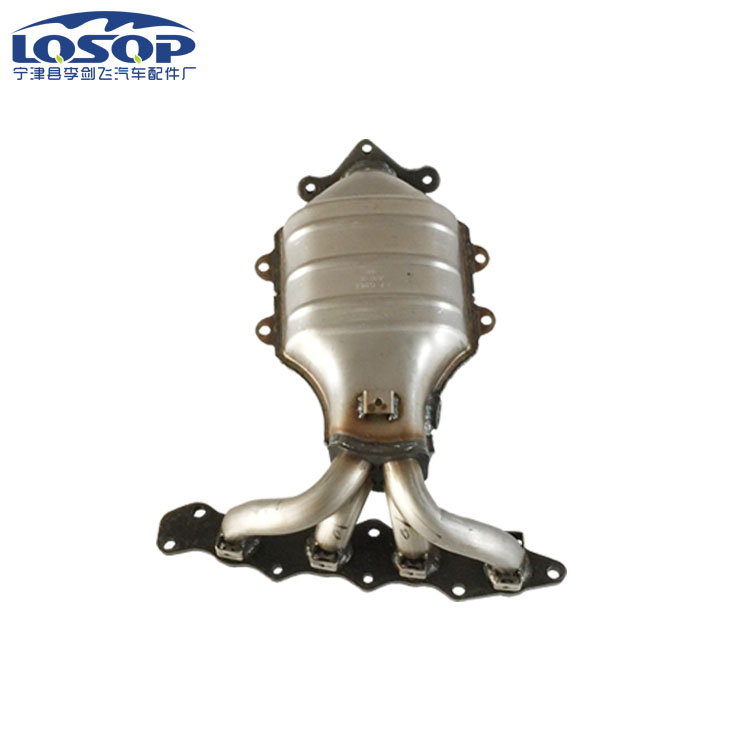
Procuring aftermarket emissions components demands a careful balancing act. You need to maintain healthy profit margins. You also must ensure strict emissions compliance for specific target markets. Sourcing a reliable Catalytic Converter for Changan Yuexiang presents unique challenges for wholesale buyers and distributors. Cheap replacement components often hide massive downstream risks. They inevitably inflate warranty return rates. They fail rigorous regional emissions tests. They ultimately damage your hard-earned supplier reputation in the automotive aftermarket.
Fleet managers, B2B distributors, and auto repair networks require reliable data. They need an evidence-based framework to evaluate and shortlist manufacturing partners. Intuition no longer works in modern global procurement. This guide provides a comprehensive methodology for vetting suppliers. We will explore the technical specifications required for this vehicle model. We will dissect pricing economics and highlight critical supply chain red flags. You will learn how to verify vendor capabilities and structure a foolproof procurement strategy.
Key Takeaways
Fitment over Flexibility: Direct-fit assemblies drastically reduce labor costs and warranty claims compared to universal alternatives for Changan Yuexiang models.
Compliance is Non-Negotiable: Supplier validation must include verifying the precious metal load (Platinum, Palladium, Rhodium) required to meet regional emissions standards.
Vendor Verification: Authentic suppliers offer transparent spec sheets, verifiable ISO/TS16949 certifications, and clear warranty terms without exaggerated performance claims.
Analyzing the Technical Requirements for Changan Yuexiang
Substrate architecture forms the physical core of any emissions control device. We typically evaluate two primary materials: ceramic and metallic substrates. Ceramic substrates utilize cordierite. They offer excellent thermal shock resistance. They withstand rapid temperature fluctuations during cold starts. They also meet most pricing constraints for aftermarket wholesale buyers. Metallic substrates utilize ultra-thin foil blocks. They lower exhaust backpressure significantly. However, they cost substantially more to manufacture. Most direct replacement units use a ceramic honeycomb structure. We recommend looking for standard cell density requirements. A 400 CPSI (Cells Per Square Inch) density provides optimal exhaust flow. It balances backpressure and conversion efficiency perfectly for Yuexiang engine displacement.
Next, we must analyze the precious metal coating ratios. Manufacturers call this the washcoat formulation. The washcoat determines OBD-II (On-Board Diagnostics) readiness success. It uses Platinum (Pt), Palladium (Pd), and Rhodium (Rh). Platinum and Palladium handle oxidation. They convert harmful hydrocarbons and carbon monoxide into water and carbon dioxide. Rhodium handles reduction. It breaks down dangerous nitrogen oxides. You need the correct chemical ratio to pass specific readiness monitors. Undersized coatings fail quickly under load. They trigger premature P0420 or P0430 engine codes. These diagnostic trouble codes frustrate mechanics and end-users. They lead directly to massive warranty claims. You must source a properly loaded Catalytic Converter for Changan Yuexiang to prevent these costly errors.
Let us compare direct-fit and universal units. Direct-fit assemblies feature pre-bent exhaust pipes. They include precise flange alignments engineered for the chassis. They position oxygen sensor ports exactly where the factory harness expects them. Installers simply bolt them on. Universal units look appealing initially on wholesale catalogs. They carry a much lower upfront unit cost. However, they require extensive cutting and welding. They increase mechanic bay installation labor drastically. They also carry a significantly higher risk of post-installation exhaust leaks. We always recommend direct-fit solutions for B2B distribution. They protect your brand reputation and keep shop owners happy.
Sourcing Evaluation Dimensions: Quality, Compliance, and Margins
Emissions standard alignment dictates your entire procurement strategy. You must determine your regional baseline before requesting quotes. North American markets demand strict EPA compliance. Global and Asian markets often follow varying Euro standards. You cannot rely on verbal factory claims alone. You must verify supplier compliance rigorously. Request legitimate third-party lab emission test reports. Authentic manufacturers supply these documents willingly.
Maximum PGM loading; complex washcoat chemistry required.
Manufacturing tolerances define long-term build quality. We look closely at factory welding techniques. TIG (Tungsten Inert Gas) welding surpasses MIG (Metal Inert Gas) welding for exhaust components. It provides cleaner, stronger, and more precise joints. You should look for robotic welding precision on all flanges and heat shields. Robotic welds prevent structural failure under intense NVH (Noise, Vibration, Harshness) conditions. The external shell material also matters deeply. Manufacturers use either 409 or 304 stainless steel. Grade 409 offers adequate corrosion resistance for mild, dry climates. It keeps wholesale costs highly manageable. Grade 304 provides superior rust protection due to higher chromium content. It serves better in harsh environments where roads see heavy winter salting.
Wholesale unit economics drive your ultimate profitability. You must calculate accurate landed costs for your inventory. Minimum Order Quantities (MOQs) impact your initial cash flow. Freight terms alter your final unit price significantly. FOB (Free on Board) agreements shift transport responsibility to you at the departure port. CIF (Cost, Insurance, and Freight) agreements cover transit risks until the shipment reaches your destination port. You should also negotiate bulk tier discounts early. Factories often reduce the per-unit margin if you commit to quarterly container volumes.
Pricing Economics and Replacement Cost Breakdown
Understanding Supplier Pricing Models
Understanding factory pricing models helps you negotiate from a position of strength. Raw material indexing plays a massive role in quote generation. PGM market prices fluctuate daily on global metal exchanges. These fluctuations directly impact your wholesale quotes. A transparent supplier explains their PGM indexing formula openly. They adjust prices based on verifiable market data rather than arbitrary markups. You should monitor Platinum and Palladium trends. They will help you time your bulk orders effectively.
We must also analyze the labor versus parts cost ratio. Some distributors prefer pushing cheaper universal parts to capture quick sales. This strategy often backfires in the B2B space. Providing a reliable, slightly higher-priced direct-fit assembly saves your clients money overall. It cuts mechanic bay time in half. B2B clients appreciate fast, predictable installations. They gladly pay a premium for hassle-free fitment. Your pricing strategy should highlight this total labor savings.
Assessing Core/Scrap Value
Assessing core and scrap value adds another important dimension to pricing economics. We must briefly acknowledge lifecycle recovery mechanics. The original OEM core holds significant end-of-life recycling value. Recyclers extract the rich factory PGM load. Aftermarket replacements usually contain strictly optimized PGM loads. They hold far less scrap value at the end of their lifecycle. You should communicate this dynamic transparently to your B2B customers. It impacts the final repair bill for the end-user. It also sets realistic expectations for future recycling rebates.
Supply Chain Risks and Red Flags to Avoid
Global aftermarket sourcing carries inherent risks. You must avoid specific, costly red flags. The "Hollow Core" scam continues to plague the auto parts industry. Some disreputable suppliers offer unfeasibly low unit prices. They achieve these prices by skipping the chemical washcoat entirely. Sometimes they reduce PGM loading to microscopically ineffective levels. The part looks physically perfect on the outside. It features excellent welds and shiny stainless steel. However, it functions essentially as an empty exhaust pipe. It will fail its very first emissions test. It will trigger a check engine light within fifty miles.
Counterfeit certifications represent another major compliance risk. Deceptive vendors fake ISO 9001 or ISO/TS 16949 documents to win your business. You must actively audit these factory claims. Check the listed certification body. Verify the registration number through online databases. Authentic suppliers maintain active, verifiable quality management systems. They welcome third-party audits.
Inconsistent batch quality ruins wholesale relationships overnight. We call this the "golden sample" trap. Your first evaluation unit performs flawlessly in your test bay. It passes all fitment and emissions tests perfectly. You confidently place a massive bulk order. Weeks later, the bulk shipment arrives with terrible quality. The factory substituted cheaper materials for the mass production run. You need strict mitigation tactics to prevent this scenario.
Follow these essential mitigation tactics:
Hire independent third-party inspectors to review the goods before container loading.
Establish a strict Acceptable Quality Limit (AQL) in your purchasing contract.
Demand raw material and PGM certificates for every single production batch.
Retain the original golden sample securely for direct physical comparison.
Implement financial penalties for shipment batches failing random quality checks.
Shortlisting Logic and Next-Step Actions
Developing a robust RFQ (Request for Quote) streamlines your entire sourcing process. You must specify exactly what you need in writing. Vague requests invite poor quality bids. A detailed RFQ filters out unqualified factories immediately. It forces suppliers to quote on identical specifications.
Your RFQ must include the following precise details:
Target emissions standard required (e.g., EPA, Euro IV, Euro V).
Required substrate material type and exact cell density (e.g., Ceramic, 400 CPSI).
Expected warranty period duration and the specific claims handling process.
Exact fitment validation for specific Changan Yuexiang engine variants and production years.
Next, establish a rigorous sample testing protocol. Ordering a sample batch requires careful planning. Do not rely purely on visual inspections in your office. Execute specific, mechanical testing parameters. Perform physical fitment checks in an actual mechanic bay. Ensure all flanges align without forcing. Conduct exhaust backpressure tests using proper gauges. Run post-installation OBD-II scans using professional diagnostic tools. The test vehicle must complete a full standard drive cycle without triggering readiness monitor codes.
Finally, build a structured decision matrix. You cannot make decisions based solely on unit cost. Weigh the quoted price against other critical operational factors. Evaluate their communication speed and English proficiency. Assess their warranty claims process clarity. Verify their proven QA methodologies and factory equipment.
Verifiable ISO/TS 16949 certification, fast communication, fair warranty.
Conclusion
Sourcing the right aftermarket emissions components requires serious diligence. It represents a delicate balance of advanced chemistry, precise metallurgy, and supply chain reliability. You cannot afford to cut corners on PGM loading or substrate quality. Prioritizing direct-fit assemblies protects your B2B relationships. It reduces installation friction for downstream mechanics. Verifying ISO certifications and third-party lab reports eliminates catastrophic compliance failures.
We encourage you to standardize your internal RFQ process immediately. Use the exact criteria and evaluation matrix provided above. Demand transparency regarding washcoat formulations and welding standards. Do not accept vague performance promises. If you need a trustworthy starting point, invite your procurement team to review verified wholesale catalogs. Request detailed spec sheets and sample units for immediate evaluation today.
FAQ
Q: What is the standard warranty period I should expect from a wholesale supplier?
A: Industry standard warranties usually cover 5 years or 50,000 miles for the structural casing and welds. They also specify a distinct mileage limit for actual emissions compliance. B2B buyers must ensure the factory legally documents these warranty terms in the purchasing contract to protect against excessive shop returns.
Q: Can aftermarket catalytic converters trigger a check engine light on a Changan Yuexiang?
A: Yes, they absolutely can. This happens if the oxygen storage capacity (OSC) of the internal washcoat does not match the OEM ECU parameters. You must source components with precise Platinum, Palladium, and Rhodium loading to satisfy the vehicle's specific OBD-II readiness monitors.
Q: Are direct-fit converters always better for wholesale distribution?
A: Generally, yes. Direct-fit models drastically reduce installation friction for the end-user repair shops. They require no cutting or welding. This convenience leads to far fewer returns, fewer exhaust leak complaints, and much higher B2B client satisfaction, despite carrying a slightly higher initial inventory cost.