Vehicle exhaust systems constantly face vibration, heat, and mechanical stress. These forces can cause fatigue, cracks, and early component failure. A Stainless Steel Exhaust Pipe offers stronger durability and better vibration control. In this article, you will learn how high-grade exhaust components from Shandong Ningjin Lijianfei Auto Parts Co., Ltd. help reduce vibration, manage heat stress, and improve long-term exhaust system reliability.
Why Vibration and Stress Are Critical Issues in Exhaust Systems
Vehicle exhaust systems operate in one of the most mechanically demanding environments in automotive engineering. Unlike static piping systems, exhaust assemblies are continuously exposed to engine pulses, high-temperature gas flow, and structural movement from the chassis. These combined forces create repeated vibration cycles and thermal stress that can gradually weaken materials, especially at connection points such as welds, brackets, and flanges.
If vibration energy is not properly absorbed or isolated, the oscillation travels through the exhaust pipes and into rigid mounting points. Over time, this repeated mechanical loading causes fatigue in the metal structure. Manufacturers such as Shandong Ningjin Lijianfei Auto Parts Co., Ltd. focus on structural exhaust pipe design that addresses these challenges at both the material and system level.
Primary Sources of Exhaust System Vibration
Several dynamic forces contribute to vibration in an exhaust system. These forces rarely act alone; instead, they interact continuously while the engine is operating.
● Engine combustion pulses and torque fluctuations Internal combustion engines generate periodic pressure pulses as cylinders fire. These pulses travel through the exhaust manifold and pipes, creating cyclic stress that causes the pipe walls to oscillate.
● High-speed exhaust gas flow creating pressure waves Exhaust gases can reach extremely high velocities. Rapid gas flow produces pressure fluctuations inside the pipe, which can excite natural vibration frequencies in the pipe structure.
● Road and chassis vibrations transmitted through mounting structures Exhaust systems are attached to the vehicle frame through brackets and rubber hangers. Road irregularities, suspension movement, and chassis flex transmit mechanical vibration directly into the exhaust assembly.
Thermal Expansion and Stress in Exhaust Pipes
Temperature variation is another critical factor influencing exhaust durability. During engine operation, exhaust temperatures may rise from ambient conditions to several hundred degrees Celsius within minutes. When the engine stops, the system cools rapidly.
This repeated heating and cooling causes the metal to expand and contract continuously. In long exhaust pipe sections or rigid connections, this movement generates internal stress that accumulates over time.
● Exhaust systems rapidly shift between extreme temperatures during operation
● Expansion and contraction create internal stresses in rigid pipe connections
● Long-term exposure leads to fatigue at weld seams and joints
The combination of vibration and thermal expansion often accelerates fatigue damage. Welded joints and connection flanges are particularly vulnerable because they concentrate mechanical stress.
Risks of Poor Vibration Management
When vibration control is insufficient, exhaust components may degrade much faster than expected. Structural fatigue begins at microscopic levels, gradually forming cracks that expand under continuous vibration cycles.
Common consequences include:
● Pipe cracking or weld failure Repeated vibration can eventually break weld seams or thin pipe sections, leading to exhaust leakage.
● Increased cabin noise and reduced driving comfort Vibrating exhaust pipes can transmit noise through the vehicle structure, producing unwanted resonance inside the cabin.
● Higher maintenance and replacement costs Premature exhaust system failures require frequent inspection and part replacement, increasing long-term vehicle maintenance expenses.
Without proper vibration-resistant design, even high-performance exhaust systems can suffer from shortened service life and reliability issues.
How Stainless Steel Exhaust Pipe Design Helps Reduce Vibration
Modern exhaust engineering increasingly relies on stainless steel exhaust pipe systems to address vibration and fatigue problems. The material properties of stainless steel, combined with optimized pipe geometry, allow exhaust assemblies to withstand both mechanical vibration and thermal cycling more effectively.
Manufacturers like Shandong Ningjin Lijianfei Auto Parts Co., Ltd. utilize high-grade stainless steel materials and precise fabrication processes to produce exhaust pipe components that maintain structural stability under demanding operating conditions.
Material Elasticity That Absorbs Vibrational Energy
One of the most valuable characteristics of stainless steel is its balance between strength and elasticity. Unlike brittle metals, stainless steel can deform slightly under dynamic loads without permanent structural damage.
This controlled flexibility allows the pipe material to absorb part of the vibration energy generated by engine pulses and exhaust gas flow. Instead of transmitting all the vibration forces to connection points, the pipe wall itself acts as a partial energy absorber.
The vibration energy is gradually dissipated within the metal structure, reducing the amplitude of oscillations traveling through the exhaust system. As a result, stainless steel pipes can operate more quietly and with less structural fatigue compared with lower-grade materials.
Structural Strength That Prevents Fatigue Damage
While elasticity helps absorb vibration, sufficient strength is necessary to prevent deformation and fatigue cracking. High-grade stainless steel alloys maintain mechanical integrity under repeated cyclic loading.
In practical exhaust system design, this means the pipe can tolerate continuous vibration without losing its original shape or structural stability. Stronger materials also reduce the risk of resonance-induced cracking, a common issue when pipe structures repeatedly vibrate at specific frequencies.
For this reason, many heavy-duty exhaust systems rely on stainless steel pipes that combine high tensile strength with fatigue resistance.
The Role of Pipe Thickness and Construction
Pipe thickness and construction geometry play an equally important role in vibration resistance. Thicker pipe walls provide greater structural stiffness and distribute stress more evenly across the pipe surface.
Pipe Design Factor | Influence on Vibration Control | Practical Impact |
Wall thickness | Higher resistance to deformation under vibration loads | Reduces risk of pipe wall fatigue |
Pipe diameter stability | Maintains uniform gas flow and structural balance | Prevents localized vibration hotspots |
Weld integrity | Strong weld seams maintain structural continuity | Improves long-term durability |
Manufacturing precision | Consistent wall thickness and alignment | Minimizes imbalance during vibration cycles |
Proper wall thickness also allows the pipe to handle pressure fluctuations caused by high-speed exhaust gas flow. This is particularly important in modern engines where exhaust pressure and temperature can vary significantly during acceleration or load changes.
When material quality, pipe thickness, and structural design are optimized together, stainless steel exhaust pipes can significantly reduce vibration transmission throughout the exhaust system while maintaining long-term durability under continuous engine operation.
Managing Heat and Corrosion with High-Grade Stainless Steel Exhaust Pipe
Automotive exhaust systems operate in an environment where extreme heat, moisture, and chemical exposure occur simultaneously. Temperatures can fluctuate dramatically within minutes, especially during engine start-up, acceleration, or shutdown cycles. These rapid changes place significant mechanical and chemical stress on exhaust components. Selecting the right material is therefore essential to maintaining long-term durability and consistent vibration performance.
High-grade stainless steel exhaust pipes are widely used in demanding applications because they offer balanced resistance to both thermal deformation and corrosion damage. Manufacturers such as Shandong Ningjin Lijianfei Auto Parts Co., Ltd. design stainless steel exhaust components specifically to withstand repeated heat cycles while maintaining stable mechanical properties.
Stable Thermal Expansion Under Extreme Heat
In a typical exhaust system, temperatures may quickly rise from ambient levels to several hundred degrees Celsius once the engine begins operating. During shutdown, the system cools just as rapidly. These continuous heating and cooling cycles cause the pipe material to expand and contract repeatedly.
High-quality stainless steel exhibits relatively stable thermal expansion behavior. Rather than expanding unpredictably, the material responds to temperature changes in a consistent and controlled manner. This stability reduces the formation of internal stress within the pipe structure.
When expansion occurs uniformly along the pipe length, stress concentration around welded joints and flanges is minimized. The result is improved structural integrity and a lower probability of fatigue cracking in areas where vibration loads are already present.
High Temperature Oxidation Resistance
Beyond thermal expansion, oxidation is another critical factor affecting exhaust pipe durability. At elevated temperatures, many conventional steels begin to oxidize rapidly. This oxidation process gradually weakens the material and can lead to brittleness.
High-grade stainless steel alloys such as 304 and 316 contain chromium and other alloying elements that form a protective oxide layer on the surface. This thin layer acts as a barrier that slows further oxidation even when the material is exposed to sustained high temperatures.
Material Property | Benefit in Exhaust Systems | Practical Impact |
Chromium-rich oxide layer | Protects surface from high-temperature oxidation | Maintains structural integrity during prolonged heat exposure |
High thermal fatigue resistance | Tolerates repeated heating and cooling cycles | Reduces cracking near weld seams |
Stable metallurgical structure | Prevents embrittlement at elevated temperatures | Extends operational lifespan of exhaust pipes |
Heat-resistant alloy composition | Maintains strength under continuous thermal load | Supports heavy-duty engine operation |
These characteristics allow stainless steel exhaust pipes to maintain their mechanical strength even when exposed to extreme operating conditions over extended periods.
Corrosion Resistance for Long-Term Reliability
Exhaust systems are exposed not only to heat but also to corrosive substances. Internally, acidic condensation forms when exhaust gases cool inside the pipe. Externally, road salt, water, and debris constantly contact the outer pipe surface.
These corrosive environments can gradually thin the pipe wall if the material lacks sufficient resistance. Wall thinning weakens the structure and reduces the pipe’s ability to absorb vibration loads.
Stainless steel’s corrosion resistance prevents this degradation from progressing rapidly. By maintaining consistent wall thickness and structural strength, stainless steel exhaust pipes preserve their vibration-damping capabilities over time. This durability is particularly important in vehicles operating in regions with heavy winter road salt exposure or high humidity.
Engineering Strategies to Further Reduce Exhaust System Stress
Material selection alone cannot fully eliminate vibration and thermal stress in an exhaust system. Effective exhaust engineering also depends on structural design and installation techniques that allow controlled movement while maintaining system stability.
Automotive exhaust manufacturers often incorporate flexible components, optimized mounting structures, and surface treatments to improve vibration isolation. Companies such as Shandong Ningjin Lijianfei Auto Parts Co., Ltd. integrate these strategies into stainless steel exhaust assemblies to enhance both durability and operational stability.
Installing Stainless Steel Flex Pipes
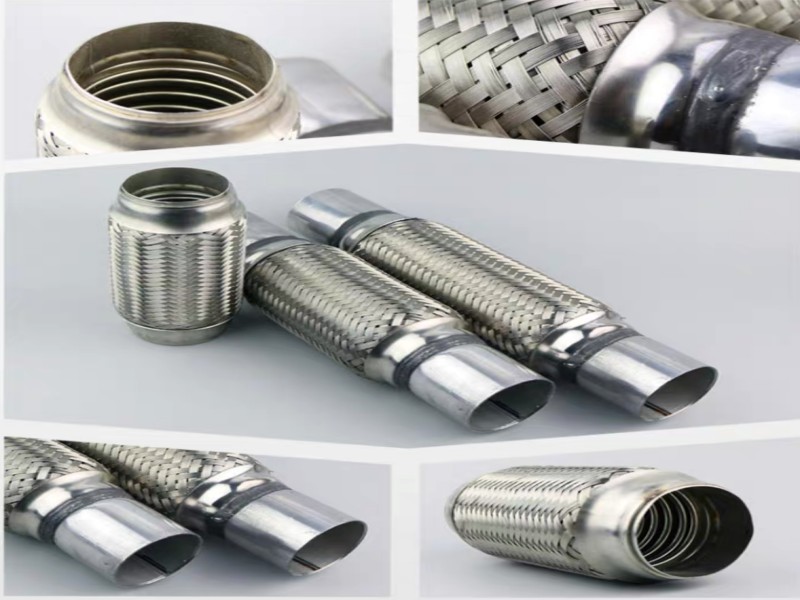
One of the most widely used solutions for reducing exhaust stress is the installation of flex pipes, sometimes called bellows sections. These components are designed with corrugated stainless steel structures that allow controlled axial and lateral movement.
Flex pipes are typically positioned between the exhaust manifold and the main exhaust pipe. At this location, they absorb engine movement caused by torque changes and vibration before the forces reach the rest of the exhaust system.
The flexible structure acts as a mechanical buffer that prevents rigid sections of the exhaust pipe from experiencing excessive stress. By isolating engine motion, flex pipes significantly reduce the likelihood of cracking at weld joints and connection flanges.
Improving Surface Finish and Pipe Movement
Surface treatment can also influence how vibration behaves within an exhaust system. A polished stainless steel surface reduces friction between the pipe and its supporting components. Lower friction allows the pipe to move slightly within its mounts when vibration occurs.
This controlled micro-movement helps dissipate vibration energy rather than transmitting it directly to structural mounting points. When combined with flexible connectors, polished pipe surfaces contribute to smoother vibration absorption throughout the exhaust assembly.
Optimizing Mounting and Support Components
Mounting design is another critical factor in controlling vibration transmission. Exhaust pipes are typically suspended using brackets and rubber hangers that connect the system to the vehicle chassis. The arrangement of these supports determines how vibration energy travels through the system.
● Stainless steel brackets provide structural strength while resisting corrosion in harsh road environments.
● Rubber hangers act as vibration isolators, preventing direct metal-to-metal contact between the exhaust pipe and the vehicle frame.
● Balanced support spacing ensures that pipe sections remain stable without becoming overly rigid.
Properly designed support systems allow the exhaust assembly to move slightly under dynamic loads while maintaining alignment. This controlled flexibility prevents excessive stress buildup and extends the service life of the entire exhaust system.
Conclusion
High-grade Stainless Steel Exhaust Pipe components help reduce vibration, control heat stress, and extend exhaust system lifespan. Their performance depends on strong materials, smart structural design, and proper installation methods. Products from Shandong Ningjin Lijianfei Auto Parts Co., Ltd. provide durable stainless steel exhaust solutions that improve system reliability and long-term vehicle performance.
FAQ
Q: Why is a Stainless Steel Exhaust Pipe better for vibration control?
A: A Stainless Steel Exhaust Pipe combines strength and elasticity, allowing it to absorb vibration energy and reduce fatigue at weld joints.
Q: How does a Stainless Steel Exhaust Pipe handle thermal stress?
A: A Stainless Steel Exhaust Pipe maintains stable expansion during heating cycles, lowering stress on connections and improving exhaust system durability.
Q: What role do flex sections play in exhaust systems?
A: Flex sections isolate engine movement, protecting the Stainless Steel Exhaust Pipe from excessive vibration and structural stress.
Q: Which stainless steel grades are commonly used for exhaust pipes?
A: Grades like 304 and 316 are typical for a Stainless Steel Exhaust Pipe because they resist oxidation, heat fatigue, and corrosion.


