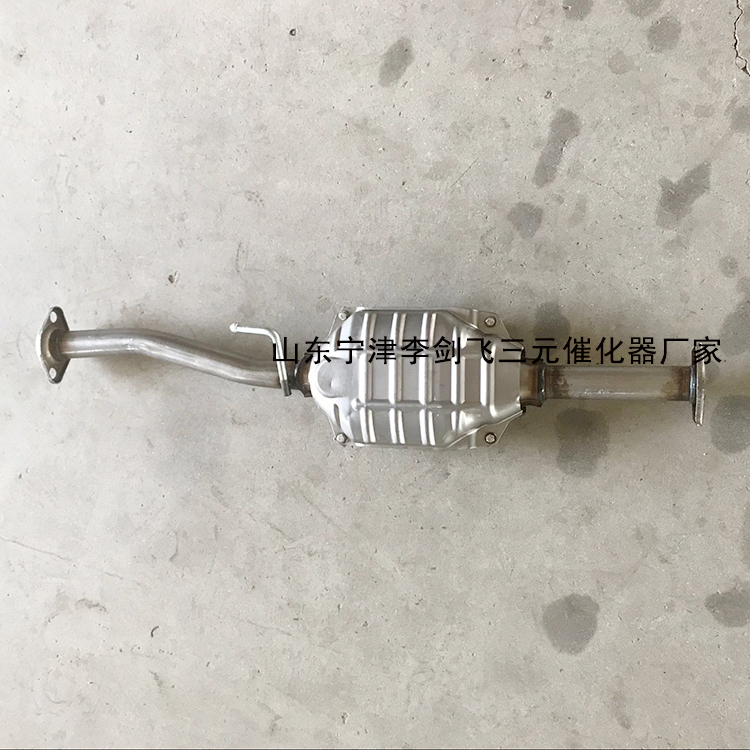
Changan Star vehicles utilize the 474 (JL474Q) 1.3L engine in highly demanding operational contexts. Drivers often rely on them for high-frequency commercial deliveries. These heavy-duty daily driving cycles accelerate exhaust component wear. You might start noticing engine hesitation during acceleration. Sudden drops in fuel economy or failing local emission tests also indicate a severe problem. These symptoms almost always point to a degraded catalytic converter. Ignoring these warning signs disrupts daily operations and increases fuel expenses.
This article provides a rigorous, evidence-based framework for evaluating and selecting a replacement. You need precise information to restore performance and avoid premature failure. We will guide you through compliance standards, substrate evaluation, and system diagnostics. Properly replacing a Catalytic Converter for Changan Star 474 ensures your vehicle stays on the road. You will learn how to verify correct fitment, match washcoat specifications, and execute professional installation procedures. By following these steps, you safeguard your commercial vehicle investment and maintain strict emission compliance.
Key Takeaways
Direct-Fit vs. Universal: Direct-fit converters mapped specifically to the Changan 474 exhaust manifold minimize installation risks and ensure accurate O2 sensor readings.
Washcoat Loading Matters: The longevity of emission reduction relies heavily on the specific loading of precious metals (Platinum, Palladium, Rhodium) matched to the 474’s displacement.
Compliance is Non-Negotiable: Selecting a non-compliant aftermarket part risks regulatory fines, failed inspections, and forced secondary replacements.
Systemic Diagnostics: A new converter will fail quickly if upstream engine issues (e.g., misfires, rich fuel mixtures) are not resolved prior to installation.
The True Cost of Converter Degradation in the 474 Engine
Operating a Changan Star with a compromised exhaust system drains operational budgets rapidly. The JL474Q 1.3L engine requires precise exhaust scavenging to maintain torque. When degradation occurs, it triggers a cascade of mechanical and financial penalties.
Performance Degradation Metrics
Internal substrates often melt or clog after years of commercial use. This physical blockage drastically increases exhaust backpressure. High backpressure chokes the 1.3L engine. Exhaust gases cannot escape the combustion chamber efficiently. This forces the engine to work harder just to expel exhaust. You will immediately notice quantifiable drops in horsepower. The throttle becomes unresponsive, especially under heavy payload conditions. A healthy exhaust system allows the engine to breathe freely. A clogged unit turns a lively commercial van into a sluggish liability.
Fuel Efficiency Penalties
Compromised converter flow directly impacts your fuel economy. Modern engine control modules rely on precise data. Upstream and downstream O2 sensors constantly monitor exhaust gas composition. Clogged substrates trap exhaust gases, skewing sensor readings. The computer often interprets this abnormal data as a lean condition. It compensates by dumping excess fuel into the cylinders. This rich-running condition plummets your MPG metrics. Unburned fuel then travels downstream. It ignites inside the exhaust piping, further damaging the remaining substrate. Addressing this issue promptly prevents excessive fuel expenditure.
Compliance and Downtime Risks
Ignoring a degraded exhaust component carries severe operational risks. You will likely face failed emissions testing during annual inspections. Failing a test pulls your commercial vehicle off the road immediately. Off-road downtime directly impacts your revenue stream. Furthermore, local environmental agencies often levy fines for non-compliance. These penalties far exceed the price of a replacement part. Proactive replacement eliminates these regulatory headaches. It guarantees your fleet remains active, legal, and profitable.
Core Evaluation Criteria: Choosing a Catalytic Converter for Changan Star 474
Selecting the right replacement part requires technical scrutiny. You cannot rely on price alone. You must evaluate the internal architecture and material quality to ensure longevity.
Substrate Architecture and Cell Density
The internal core acts as the primary reaction zone. Manufacturers typically use ceramic or metallic substrates. You must choose the right material for your specific driving conditions.
Substrate Material Comparison
Feature
Ceramic Substrate
Metallic Substrate
Durability
Prone to cracking under physical shock.
Highly resistant to vibration and impacts.
Exhaust Flow
Standard flow rates, thicker cell walls.
Higher flow rates, thinner cell walls.
Warm-up Time
Takes longer to reach operating temperature.
Heats up rapidly, reducing cold-start emissions.
Cost
Generally more affordable.
Premium pricing.
Cell density plays a crucial role in performance. Engineers measure this in Cells Per Square Inch (CPSI). The optimal CPSI for the 474 engine usually hovers around 400. This density balances exhaust flow rates perfectly. It provides sufficient surface area to scrub emissions without creating excessive backpressure. Lower CPSI might flow better but fails emission tests. Higher CPSI restricts flow, hurting the 1.3L engine's power output.
Precious Metal Loading & Washcoat Technology
The washcoat binds precious metals to the substrate. These metals perform the actual chemical conversion. Platinum (Pt) and Palladium (Pd) oxidize harmful hydrocarbons and carbon monoxide. Rhodium (Rh) reduces nitrogen oxides. The ratio of these metals must align exactly. It must match the specific exhaust gas temperature profile of the Changan 474.
We strongly warn against ultra-low-cost alternatives. Budget manufacturers often skimp on catalyst loading. They use minimal amounts of precious metals to cut costs. These cheap units might pass a tailpipe test once. However, they degrade rapidly under commercial driving stresses. This leads to a rapid check engine light (CEL) recurrence. Investing in a properly loaded unit prevents frustrating rework.
Heat Shielding and Casing Integrity
Commercial vehicles endure harsh environments. Exhaust components face extreme thermal fatigue and physical corrosion. High-grade stainless steel casing is absolutely vital. We recommend looking for 409-grade stainless steel. It resists rust from road salt and moisture. Strong heat shields prevent thermal damage to nearby chassis components. A robust casing ensures the unit survives high-duty cycle applications. Weak casings split open, causing dangerous exhaust leaks right under the cabin.
Direct-Fit vs. Universal Solutions: A Cost-Benefit Analysis
Buyers often face a choice between universal and direct-fit options. Understanding the true cost of each path prevents expensive mistakes.
Universal Converters (The Budget Route)
Many fleet operators initially lean toward universal converters. They boast a significantly lower initial purchase price. However, the hidden costs accumulate quickly during installation.
Pros: The upfront unit price looks highly attractive. They are readily available at most local parts stores.
Cons: Universal units require extensive custom fabrication. Technicians must cut the old exhaust pipes. They must weld the new unit into place carefully. This drastically increases labor hours. It also carries a high risk of altering exhaust flow dynamics. Improper welding can trigger permanent P0420 efficiency codes.
Direct-Fit Converters (The Recommended Route)
We highly advocate for application-specific parts. They simplify the repair process dramatically.
Engineered Precision: Manufacturers design these specifically for the Changan Star 474 chassis. They match the factory exhaust layout perfectly.
Bolt-On Installation: Mechanics simply unbolt the old unit and bolt the new one in. This minimizes expensive labor hours.
Accurate Flange Sealing: Factory-style flanges prevent exhaust leaks. They ensure proper sensor bung placement for accurate O2 readings.
Direct-fit units carry a higher upfront cost. Yet, they offset this through reduced labor bills. They also offer a much longer functional lifespan.
Navigating Emission Standards and Compliance Requisites
Replacing an exhaust component requires strict adherence to legal frameworks. Failing to verify compliance leads to legal and financial trouble.
Local Emission Standards Alignment
You must match the converter’s rating to the vehicle's original specification. The Changan 474 engine operates under specific regulatory frameworks. Depending on your region, this might be Euro III, Euro IV, or local equivalents. Installing a Euro III unit on a Euro IV vehicle is a critical error. The vehicle will fail legal inspections instantly. The engine control module expects specific emission reductions. Mismatched parts throw persistent efficiency codes. Always verify your local regulations before purchasing.
Avoiding Counterfeit and Substandard Parts
The aftermarket is flooded with substandard components. You must protect yourself from counterfeit parts.
Check for visible manufacturer stampings on the metal casing.
Some drivers attempt to bypass emissions systems entirely. They use O2 sensor spacers or electronic emulators. We strongly advise against this practice. These defeat devices are illegal in most jurisdictions. Using them carries the risk of massive regulatory fines. Furthermore, they trick the engine computer. The engine might run dangerously lean or rich. This causes severe internal engine damage over time. Replacing the faulty converter remains the only safe and legal solution.
Common Mistake: Relying on cheap "check engine light eliminators" instead of fixing the mechanical blockage. This eventually leads to blown exhaust manifold gaskets or ruined cylinder heads due to trapped heat.
Implementation Realities: Pre- and Post-Installation Best Practices
Buying a high-quality part is only the first step. Proper installation procedures dictate how long the new unit will last. You must treat the exhaust system holistically.
Upstream Diagnostic Imperative
Converters rarely die of natural causes. Outside forces usually murder them. We strongly advise against installing a new unit blindly. You must fix the root cause of the original failure first. Did raw fuel melt the old substrate? Check for leaking fuel injectors or fouled spark plugs. Did coolant poison the precious metals? You might have a blown head gasket. If you ignore these upstream engine issues, the new unit will fail. It might melt down within a few hundred miles. Perform a comprehensive engine diagnostic before unbolting the exhaust.
Oxygen (O2) Sensor Replacement Logic
Replacing high-mileage O2 sensors concurrently is an industry-standard best practice. Sensors degrade over time. They become sluggish and coated in carbon. Slow sensors send inaccurate fuel trim data to the computer. The computer might command a rich mixture, dumping fuel into your brand-new exhaust part. Fresh sensors guarantee crisp, accurate data. This protects your investment and maximizes fuel economy.
Best Practice: Always apply anti-seize compound to the threads of new oxygen sensors. This prevents them from welding themselves to the exhaust pipe, making future maintenance much easier.
The "Break-In" Period
New substrates require a specific thermal break-in procedure. The internal matting must cure properly. Skipping this step can crack the new ceramic core.
Start the engine and let it idle normally. Do not rev the engine.
Allow the vehicle to idle for five full minutes.
Increase engine speed to 2500 RPM for two minutes.
Turn the engine off and let the exhaust system cool completely.
This thermal cycling procedure safely expands the internal components. It ensures the intumescent matting locks the substrate tightly inside the steel casing.
Conclusion
Replacing this critical exhaust component is a necessary investment in your commercial operations. It restores vehicle uptime, recovers lost fuel efficiency, and guarantees legal compliance. Prioritizing correct cell density, precise direct fitment, and verified washcoat loading is crucial. These factors directly translate to sustained reliability and maximum vehicle uptime. Avoid taking shortcuts with universal patches or defeat devices.
Your next step is verification. Consult with your trusted fleet mechanic before making a purchase. Check your vehicle identification number (VIN) and engine sub-model. Cross-reference these details with specialized parts suppliers. A precise match guarantees a smooth installation and years of trouble-free driving.
FAQ
Q: How long should a replacement catalytic converter last on a Changan Star 474?
A: Under optimal conditions, a high-quality replacement should last between 70,000 to 100,000+ miles. This longevity assumes the engine runs at optimal fuel mixtures. It must not burn oil or leak coolant into the exhaust. Regular maintenance of spark plugs and air filters greatly extends this lifespan.
Q: Will a new catalytic converter instantly turn off my Check Engine Light (CEL)?
A: No, it will not happen instantly. Technicians must manually clear the stored OBD-II codes using a scan tool. Afterward, the vehicle must complete a specific drive cycle. This allows the computer to run its internal monitors and verify the P0420/P0430 efficiency codes are permanently resolved.
Q: Can I clean a clogged Changan 474 catalytic converter instead of replacing it?
A: Chemical fuel additives rarely fix severe physical blockages. They cannot repair structural substrate breakdown or melted ceramic. These products might clear light carbon soot temporarily. However, for hard failures causing backpressure and power loss, full replacement remains the only verifiable and safe solution.