Real-world emission control is not driven by abstract technology, but by components that work reliably under heat, pressure, and chemical stress every single day. One such component is the Ceramic Honeycomb Substrate, which plays a central role in modern exhaust treatment systems. At Shandong Ningjin Lijianfei Auto Parts Co., Ltd., this substrate is produced as a core carrier for catalytic converters and industrial purification systems, supporting cleaner emissions across automotive and industrial sectors. This article explains how ceramic honeycomb substrates are used, why they matter in different systems, and how they deliver long-term value for emission control and industrial operations.
Ceramic Honeycomb Substrate in Automotive Emission Systems
Automotive exhaust systems are designed to handle high temperatures, rapid thermal changes, and a constant flow of chemically aggressive gases. The ceramic honeycomb substrate is the structural foundation that allows catalytic converters to function effectively under these demanding conditions.
Role in catalytic converters
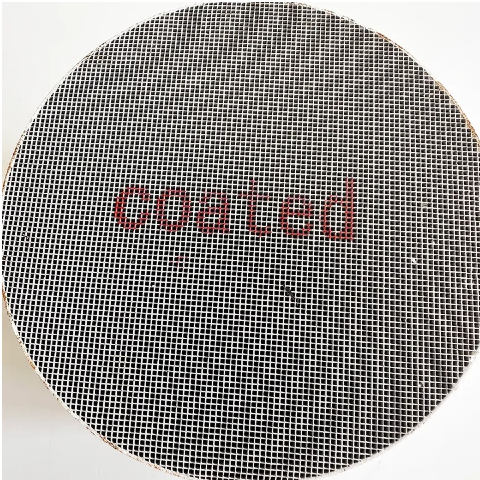
In a catalytic converter, the ceramic honeycomb substrate serves as the internal carrier that supports the catalytic coating. Exhaust gases pass through thousands of tiny channels formed within the honeycomb structure. As gases flow through these channels, they come into close contact with the catalyst layer deposited on the walls.
This structure ensures that a maximum amount of exhaust gas interacts with the active catalyst materials. The honeycomb design allows for both high surface area and low flow resistance, which are essential for maintaining engine performance while achieving high conversion efficiency.
For suppliers like Shandong Ningjin Lijianfei Auto Parts Co., Ltd., the ceramic honeycomb substrate is manufactured to maintain consistent channel geometry and structural integrity. This ensures uniform gas flow, stable catalytic performance, and long-term durability when installed in catalytic converters.
Chemical reactions it facilitates
The ceramic honeycomb substrate enables the chemical reactions that convert harmful exhaust gases into less harmful compounds. These reactions include:
• Oxidation of carbon monoxide into carbon dioxide
• Oxidation of unburned hydrocarbons into carbon dioxide and water
• Reduction of nitrogen oxides into nitrogen and oxygen
The catalyst layer applied to the substrate walls contains precious metals such as platinum, palladium, and rhodium. These metals accelerate chemical reactions without being consumed. The ceramic honeycomb structure ensures that these catalysts are evenly distributed and remain firmly bonded to the substrate surface during prolonged operation.
Because the honeycomb channels expose exhaust gases to the catalyst across a large internal surface area, the conversion process is more efficient, even during short contact times.
Why large surface area matters for emission conversion efficiency
Surface area is one of the most important performance parameters for emission control. A ceramic honeycomb substrate with high cell density provides a much larger internal surface for catalyst coating compared to solid or pellet-based structures.
This expanded surface area allows more exhaust gas molecules to interact with catalytic sites at the same time. The result is faster reaction rates and higher pollutant conversion efficiency. At the same time, the thin channel walls help keep pressure drop low, preventing unnecessary engine load or reduced fuel economy.
This balance between high surface area and controlled gas flow is one of the key reasons ceramic honeycomb substrates are widely used in automotive catalytic converters.
Application in Gasoline vs Diesel Engines
Emission profiles differ significantly between gasoline and diesel engines, and ceramic honeycomb substrates are adapted accordingly to support different operating conditions.
Gasoline engines typically produce higher levels of hydrocarbons and carbon monoxide, while diesel engines generate more nitrogen oxides and particulate matter. As a result, catalytic converters for gasoline vehicles are often optimized for oxidation reactions, while diesel exhaust systems may require additional components such as diesel oxidation catalysts and particulate filters.
Ceramic honeycomb substrates are engineered with different cell densities, wall thicknesses, and coating compositions to meet these specific needs. In gasoline systems, finer cell structures improve conversion efficiency for hydrocarbons and carbon monoxide. In diesel systems, robust structures with controlled porosity help manage higher exhaust temperatures and harsher chemical environments.
Shandong Ningjin Lijianfei Auto Parts Co., Ltd. supplies ceramic honeycomb substrates designed to match both gasoline and diesel exhaust system requirements, supporting stable performance across a wide range of vehicle types.
Industrial Uses Beyond Automotive
While automotive exhaust systems are the most visible application, ceramic honeycomb substrates are also widely used in industrial emission control and process systems.
Power plants and industrial boilers
Large combustion systems such as power plants and industrial boilers generate exhaust gases containing nitrogen oxides, sulfur compounds, and particulate matter. Ceramic honeycomb substrates are used as carriers for catalysts that reduce these pollutants before exhaust gases are released into the atmosphere.
Because these systems operate continuously under high thermal loads, the substrate material must offer long-term thermal stability and mechanical strength. Ceramic honeycomb substrates provide consistent structural performance under prolonged heat exposure, making them suitable for industrial exhaust treatment.
VOC treatment and air purification systems
Volatile organic compounds are emitted by many industrial processes, including painting, printing, chemical production, and fuel handling. These compounds contribute to air pollution and health risks.
Ceramic honeycomb substrates are used in catalytic oxidation systems that break down VOCs into carbon dioxide and water. The honeycomb structure allows efficient airflow while maintaining high catalytic contact, ensuring effective pollutant removal without excessive energy consumption.
These systems are commonly installed in factories seeking to meet environmental regulations and improve workplace air quality.
Heat recovery and regenerative thermal oxidizers
In regenerative thermal oxidizers, ceramic honeycomb substrates are used to store and release heat during exhaust gas treatment cycles. Their high thermal mass and heat resistance allow them to absorb heat from hot exhaust streams and transfer it to incoming air.
This heat recovery process significantly reduces fuel consumption and operating costs. The honeycomb structure enables efficient heat exchange while maintaining low pressure drop across the system.
Ceramic honeycomb substrates used in these applications are designed for both thermal efficiency and long-term structural durability.
Operational Benefits for Industrial Clients
Beyond their technical function, ceramic honeycomb substrates provide measurable operational advantages for industrial users.
Improved fuel efficiency and lower operating costs
Because the honeycomb structure minimizes flow resistance, exhaust gases pass through the system with minimal pressure loss. This reduces the energy required to move exhaust through treatment systems, leading to lower fuel or power consumption.
In regenerative thermal oxidizers and catalytic oxidation systems, the efficient heat exchange supported by ceramic honeycomb substrates further reduces energy demand, translating into long-term cost savings.
Extended lifespan reduces maintenance cycles
Ceramic honeycomb substrates are designed to withstand frequent thermal cycling and chemical exposure without cracking or deforming. Their low thermal expansion properties allow them to survive rapid temperature changes, such as engine cold starts or industrial load fluctuations.
This durability extends service life and reduces the frequency of system shutdowns for substrate replacement. Lower maintenance frequency means reduced downtime and improved production continuity.
Meets stringent emissions regulations
Environmental regulations continue to tighten across global markets. Emission standards such as EPA, CARB, and Euro norms require consistent pollutant reduction performance.
Ceramic honeycomb substrates support stable catalytic performance over long operating periods, helping automotive and industrial systems maintain compliance with regulatory requirements. Their consistent geometry ensures uniform gas flow and predictable conversion efficiency.
For customers operating in regulated markets, this reliability is essential for avoiding penalties, production interruptions, and regulatory non-compliance.
Table: Typical Applications of Ceramic Honeycomb Substrate
Application | Primary Function | Benefit to Customer |
Automotive Converters | Emission reduction | Meets legal standards |
Industrial Exhaust Systems | Pollutant removal | Cleaner output |
RTO / Heat Recovery | Energy reuse | Lower fuel costs |
Chemical Reactors | Catalytic processing | Improved reaction rates |
Air & VOC Filters | Purification | Environmental compliance |
This table highlights how ceramic honeycomb substrates support a wide range of emission control and industrial process applications, delivering both environmental and economic value.
Common Challenges and Solutions
Despite their advantages, ceramic honeycomb substrates face operational challenges that must be addressed through proper material selection and design.
Thermal shock during engine cold starts
Rapid temperature changes during engine startup or industrial load shifts can introduce thermal stress. If the substrate expands or contracts too quickly, cracking may occur.
To mitigate this risk, ceramic honeycomb substrates are manufactured from materials with low thermal expansion coefficients. Cordierite-based ceramics are commonly used because they maintain dimensional stability under rapid temperature fluctuations.
Catalyst poisoning and contamination
Exposure to sulfur, lead, and other contaminants can degrade catalytic activity over time. This reduces conversion efficiency and shortens service life.
High-quality ceramic substrates are engineered with optimized surface structures that support strong catalyst adhesion. This reduces catalyst loss and helps maintain long-term performance.
Material and Design Strategies
Material science and structural design play a central role in solving operational challenges.
Low thermal expansion ceramics are selected to minimize cracking risk under thermal cycling. These materials maintain structural stability even under repeated heating and cooling cycles.
Optimized cell density balances surface area and pressure drop. Higher cell densities improve catalytic efficiency, while carefully controlled wall thickness ensures sufficient mechanical strength.
Precise extrusion and firing processes ensure consistent channel geometry. This consistency supports uniform gas flow, stable catalytic performance, and predictable pressure drop across the substrate.
Shandong Ningjin Lijianfei Auto Parts Co., Ltd. applies advanced manufacturing techniques to produce ceramic honeycomb substrates that meet both automotive and industrial performance requirements.
Conclusion
From automotive exhaust systems to industrial purification equipment, the Ceramic Honeycomb Substrate is a foundational component that enables reliable emission control and catalytic processing. Its honeycomb structure delivers high surface area, efficient gas flow, thermal stability, and long-term durability under demanding operating conditions.
For applications ranging from catalytic converters in passenger vehicles to regenerative thermal oxidizers in industrial facilities, ceramic honeycomb substrates provide the structural and functional support needed for effective pollutant conversion and energy-efficient operation.
At Shandong Ningjin Lijianfei Auto Parts Co., Ltd., ceramic honeycomb substrates are manufactured as core carriers for catalytic converters and industrial exhaust systems, supporting consistent performance across global markets. If you are seeking reliable emission control components for your Catalytic Converter or industrial purification system, contact us to learn how our ceramic substrate solutions can meet your technical and operational needs.
FAQ
1. How is a ceramic honeycomb substrate used in automotive emission control?
It serves as the internal carrier in catalytic converters, supporting the catalyst layer and enabling efficient conversion of harmful exhaust gases.
2. Why is ceramic preferred over metal substrates in many applications?
Ceramic substrates offer better thermal stability, lower thermal expansion, and longer service life under high-temperature conditions.
3. Can ceramic honeycomb substrates be used in industrial air purification systems?
Yes, they are widely used in VOC treatment systems, heat recovery units, and industrial exhaust purification equipment.
4. What factors affect the performance of a ceramic honeycomb substrate?
Material composition, cell density, wall thickness, surface area, and catalyst adhesion quality all influence substrate performance.


