Have you ever wondered why some exhaust systems last longer than others? Modern engines create heat, vibration, and constant movement. A Stainless Steel Exhaust Pipe with bellows helps manage these stresses effectively. In this article, you will learn how these components improve durability, flexibility, and overall exhaust system reliability.
Why Stainless Steel Exhaust Pipe Bellows Are Essential in Modern Exhaust Systems
Modern exhaust systems operate under extremely dynamic conditions. Engines generate continuous vibration, rapid thermal expansion, and structural movement that rigid exhaust pipes alone cannot safely absorb. Without a flexible component built into the system, these forces accumulate stress at weld points and connection joints, often leading to fatigue cracking or leakage after repeated heat cycles.
Managing Thermal Expansion in Exhaust Systems
Exhaust pipes are constantly exposed to high temperatures that can fluctuate dramatically during engine operation. As temperatures rise, metal components expand; when the engine cools, they contract again. This repeated expansion and contraction can gradually weaken rigid pipe connections and lead to deformation or fractures.
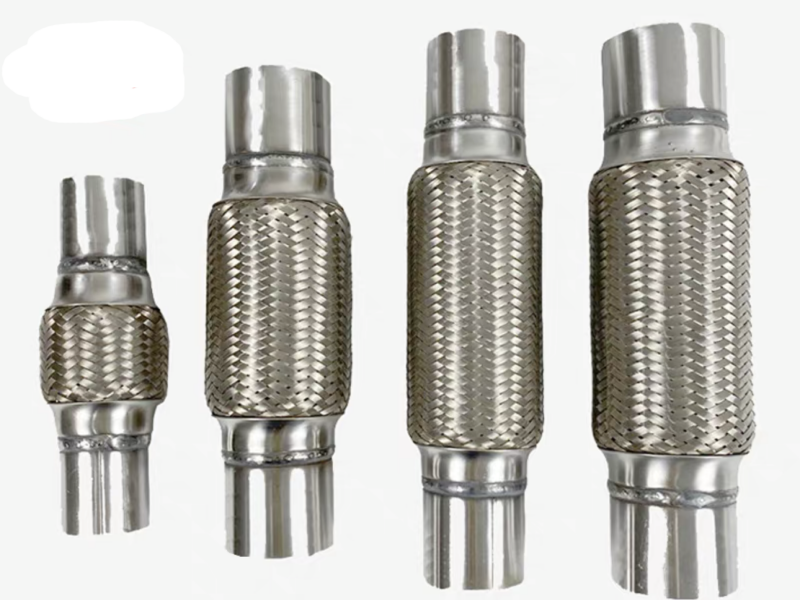
Stainless steel exhaust pipe bellows provide a controlled expansion zone within the exhaust system. Their corrugated structure allows the pipe to extend or compress slightly without transferring stress to nearby components. Instead of forcing rigid pipes to absorb the entire thermal load, the bellows act as a buffer that absorbs thermal movement.
This flexibility is particularly important in systems exposed to intense heat cycles such as turbocharged engines, diesel trucks, industrial generators, and marine propulsion units. In these environments, exhaust temperatures can fluctuate significantly within short operating periods.
Absorbing Engine Vibration and Movement
Engine torque and chassis movement introduce continuous mechanical stress into exhaust assemblies. When an engine accelerates or shifts load, it naturally moves within its mounts. If the exhaust system were completely rigid, this motion would transfer directly to pipes, flanges, and weld seams.
Bellows structures are engineered to absorb multiple types of movement:
● Axial movement – extension or compression along the pipe length
● Lateral movement – side-to-side displacement caused by chassis flex
● Angular movement – slight bending or rotational shifts between connected sections
By allowing controlled motion in these directions, bellows reduce mechanical strain throughout the exhaust system. This not only protects the pipes themselves but also prevents vibration from propagating through the vehicle frame, helping maintain smoother operation.
Protecting High-Value Exhaust Components
Exhaust bellows serve as a protective interface between the engine and sensitive exhaust components. Expensive parts such as catalytic converters, turbochargers, and exhaust manifolds can suffer premature damage if they are exposed to constant vibration or misalignment.
Without a flexible section, thermal stress and vibration often concentrate at connection points. Over time this may cause cracked manifolds, loose flanges, or leaks near emission-control components.
A properly positioned bellows section helps distribute these forces evenly along the system, improving durability and reducing maintenance frequency. In complex exhaust layouts—especially those with long pipe runs or multiple bends—the presence of a flexible section can significantly improve system reliability and service life.
Key Advantages of Stainless Steel Exhaust Pipe Bellows
The performance of an exhaust bellows largely depends on the materials used in its construction. Stainless steel has become the preferred choice because it combines corrosion resistance, heat tolerance, and mechanical durability in a single alloy system. These characteristics allow bellows to operate reliably in harsh exhaust environments where temperature fluctuations, chemical exposure, and vibration occur simultaneously.
Superior Corrosion Resistance
Exhaust gases contain moisture, sulfur compounds, and acidic byproducts produced during combustion. These substances can rapidly degrade conventional steel pipes, especially when condensation forms during engine cool-down cycles.
Stainless steel alloys contain chromium, which reacts with oxygen to form a thin protective oxide layer on the metal surface. This passive layer shields the underlying material from corrosion and prevents rust from spreading even when the surface experiences minor damage.
As a result, stainless steel bellows are able to withstand exposure to:
● road salt and moisture in automotive environments
● acidic exhaust condensates produced during combustion
● high humidity conditions in marine or industrial installations
Because the corrosion process is significantly slowed, stainless steel bellows typically maintain structural integrity for far longer than mild steel alternatives.
High Temperature Stability
Exhaust systems regularly operate at temperatures ranging from several hundred degrees to well over 800°F depending on engine type and load conditions. Materials used in flexible connectors must therefore maintain both strength and dimensional stability under prolonged heat exposure.
Common stainless steel grades used in exhaust bellows include 304 and 321 stainless steel. These alloys provide excellent resistance to oxidation and retain mechanical strength at elevated temperatures.
Grade 321 stainless steel is particularly suitable for high-temperature environments because it contains titanium stabilizers. These elements prevent structural weakening that can occur when stainless steel is repeatedly heated and cooled during engine operation.
Long-Term Fatigue Resistance
Unlike rigid piping, bellows components are designed to flex continuously throughout the life of the exhaust system. Every acceleration, deceleration, and vibration cycle introduces mechanical movement into the bellows structure.
To handle this repeated stress, many high-quality exhaust bellows use multi-layer construction. Several thin layers of stainless steel are stacked together to form the corrugated structure. This design distributes mechanical loads more evenly and reduces the risk of localized stress concentrations.
Design Feature | Engineering Benefit | Practical Impact |
Multi-ply stainless steel layers | Distributes stress across multiple thin sheets | Improves fatigue resistance during repeated flexing |
Corrugated bellows geometry | Allows controlled axial, lateral, and angular motion | Prevents cracking of rigid exhaust pipes |
High-temperature stainless alloys | Maintains structural strength during thermal cycling | Ensures durability in demanding engine environments |
This combination of corrosion resistance, heat stability, and fatigue durability makes stainless steel bellows one of the most reliable flexible components used in modern exhaust systems.
How Stainless Steel Exhaust Pipe Bellows Improve System Performance
In modern exhaust assemblies, flexibility is not just a structural convenience—it directly influences performance, reliability, and operating efficiency. Stainless steel exhaust pipe bellows are engineered to manage the dynamic forces produced by engine operation, allowing the exhaust system to function smoothly even under constant vibration, heat expansion, and mechanical movement. Instead of forcing rigid pipes to withstand these stresses, bellows act as controlled movement zones that absorb mechanical loads before they can accumulate in vulnerable areas.
Multi-Directional Movement Absorption
One of the most important performance contributions of exhaust bellows is their ability to absorb movement in multiple directions simultaneously. Engines rarely move in a single axis; instead, vibration, torque reaction, and chassis flex create a complex pattern of motion throughout the exhaust system.
The corrugated geometry of stainless steel bellows allows controlled flexibility that accommodates these movements without deforming surrounding components. This design prevents stress concentration at weld seams and connection points, which are typically the first areas to fail in rigid exhaust layouts.
Key movement types managed by bellows include:
● Axial movement – compression and extension along the pipe length caused by thermal expansion
● Lateral movement – side displacement resulting from chassis flex or mounting movement
● Angular movement – slight bending between connected exhaust sections during engine torque shifts
By distributing these movements across the flexible section, bellows prevent repeated stress loading on rigid pipes and maintain structural stability within the entire exhaust assembly.
Reduced Noise and Vibration
Engine vibration can easily propagate through rigid exhaust piping and transmit noise throughout the vehicle structure. Without isolation, these vibrations travel through brackets, frames, and mounting points, increasing mechanical noise and accelerating component wear.
Stainless steel bellows act as a vibration isolation element between the engine and the rest of the exhaust system. The flexible corrugations absorb high-frequency vibration before it can spread along the exhaust pipe network.
This isolation improves system operation in several ways:
● Reduced vibration transfer to the vehicle chassis
● Lower mechanical stress on exhaust brackets and supports
● Quieter operation inside the cabin or operator environment
In heavy-duty equipment or power generation systems, vibration damping also protects nearby components from fatigue damage caused by prolonged oscillation.
Improved Exhaust Flow Efficiency
Beyond structural benefits, bellows design can also influence exhaust gas flow characteristics. High-quality stainless steel bellows often include an internal liner, which provides a smoother pathway for exhaust gases as they pass through the flexible section.
Without this liner, exhaust gases would encounter the ridged inner surface of the corrugated bellows. That turbulence could increase flow resistance and slightly reduce system efficiency. A properly designed liner shields the corrugated structure from direct gas impact and maintains a more streamlined internal channel.
Design Element | Function | Performance Impact |
Corrugated bellows section | Provides mechanical flexibility | Absorbs thermal expansion and vibration |
Internal liner | Smooth internal gas pathway | Reduces turbulence and backpressure |
Multi-ply stainless construction | Distributes mechanical stress | Extends fatigue life under repeated movement |
Together, these features help maintain consistent exhaust gas flow while protecting the system from mechanical and thermal stress.
Choosing the Right Stainless Steel Exhaust Pipe Bellows
Selecting the correct exhaust bellows requires evaluating more than just pipe diameter or length. Performance, durability, and compatibility with operating conditions depend on several design factors including material grade, structural configuration, and the environment in which the exhaust system operates. Careful selection ensures the bellows can withstand vibration, temperature fluctuations, and pressure variations without premature failure.
Selecting the Correct Material Grade
Material selection determines how well the bellows can handle heat exposure and corrosion over time. Stainless steel alloys are widely used because they combine strength, oxidation resistance, and durability under repeated thermal cycling.
Two grades commonly used in exhaust systems include:
● 304 stainless steel – Suitable for standard automotive applications and moderate temperature environments. It provides strong corrosion resistance and good mechanical strength for most passenger vehicles.
● 321 stainless steel – Designed for higher temperature conditions, particularly in turbocharged engines or heavy-duty machinery. The titanium stabilization within this alloy improves resistance to structural weakening during prolonged heat exposure.
Choosing the appropriate alloy ensures the bellows can maintain structural integrity without warping or cracking under continuous thermal stress.
Evaluating Structural Design Features
The internal structure of the bellows has a significant impact on durability and flexibility. Manufacturers use different construction methods depending on the required fatigue resistance and operating conditions.
Important structural elements include:
● Single-ply bellows – A single metal layer that provides flexibility and cost efficiency for moderate-duty systems.
● Multi-ply bellows – Multiple thin stainless steel layers stacked together to improve fatigue resistance and distribute mechanical stress.
● Inner liner systems – Smooth internal sleeves that protect the corrugated section from high-velocity exhaust gases while improving flow stability.
Multi-layer designs are particularly beneficial in applications with high vibration levels or frequent thermal cycling, as they extend the fatigue life of the component.
Considering Application Requirements
Different operating environments place different demands on exhaust bellows. Understanding how the system will be used helps determine the most suitable design and material combination.
Application Environment | Typical Operating Conditions | Bellows Requirements |
Passenger vehicles | Moderate temperatures and vibration | Flexible bellows with corrosion-resistant stainless steel |
Commercial trucks | Higher engine load and long operating cycles | Multi-ply construction with improved fatigue resistance |
Industrial machinery | Continuous operation with heavy vibration | Reinforced bellows with durable internal liner |
Marine systems | High humidity and salt exposure | Corrosion-resistant stainless alloys |
Matching the bellows design to the specific operating environment helps prevent premature wear and ensures reliable performance over time.
Partnering with a Reliable Manufacturer
Manufacturing quality plays a critical role in the long-term durability of exhaust bellows. Precision forming, consistent welding, and accurate material control all influence fatigue life and resistance to thermal stress.
A manufacturer with specialized experience in exhaust components can provide consistent quality, accurate dimensional tolerances, and reliable material sourcing. Companies such as Shandong Ningjin Lijianfei Auto Parts Co., Ltd. focus on producing stainless steel exhaust bellows designed for demanding automotive and industrial environments, ensuring durability under high-temperature and high-vibration conditions.
Conclusion
Stainless steel exhaust pipe bellows improve exhaust system durability and flexibility under demanding conditions. They absorb vibration, manage thermal expansion, and protect critical components from damage. High-quality bellows from Shandong Ningjin Lijianfei Auto Parts Co., Ltd. provide reliable performance, durable materials, and stable exhaust flow for automotive and industrial applications.
FAQ
Q: Why is a Stainless Steel Exhaust Pipe bellows used in exhaust systems?
A: A Stainless Steel Exhaust Pipe bellows absorbs vibration and thermal expansion, reducing stress on rigid exhaust components.
Q: How does a Stainless Steel Exhaust Pipe improve system durability?
A: A Stainless Steel Exhaust Pipe resists corrosion and heat, helping maintain structural integrity during repeated thermal cycles.
Q: What factors should engineers consider when selecting a Stainless Steel Exhaust Pipe bellows?
A: Engineers should evaluate Stainless Steel Exhaust Pipe material grade, movement capacity, temperature range, and fatigue resistance.
Q: When are bellows preferred over rigid exhaust connections?
A: A Stainless Steel Exhaust Pipe bellows is preferred when systems experience vibration, misalignment, or significant thermal expansion.


